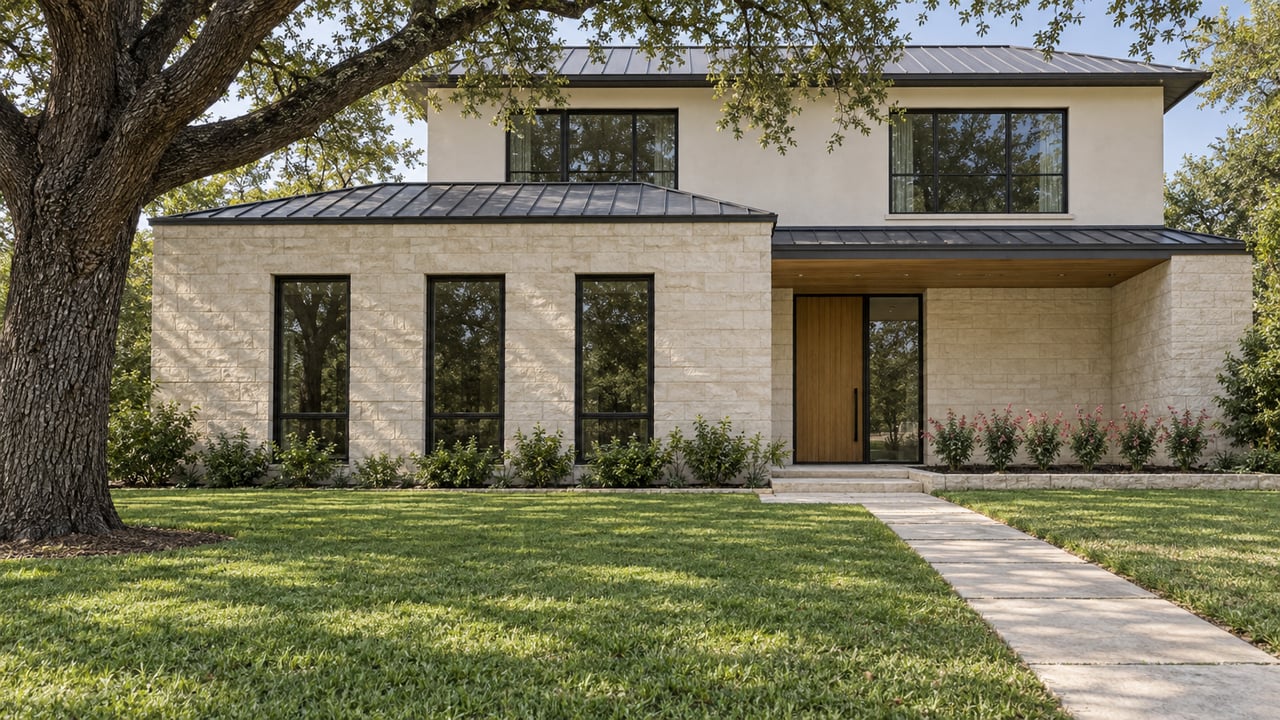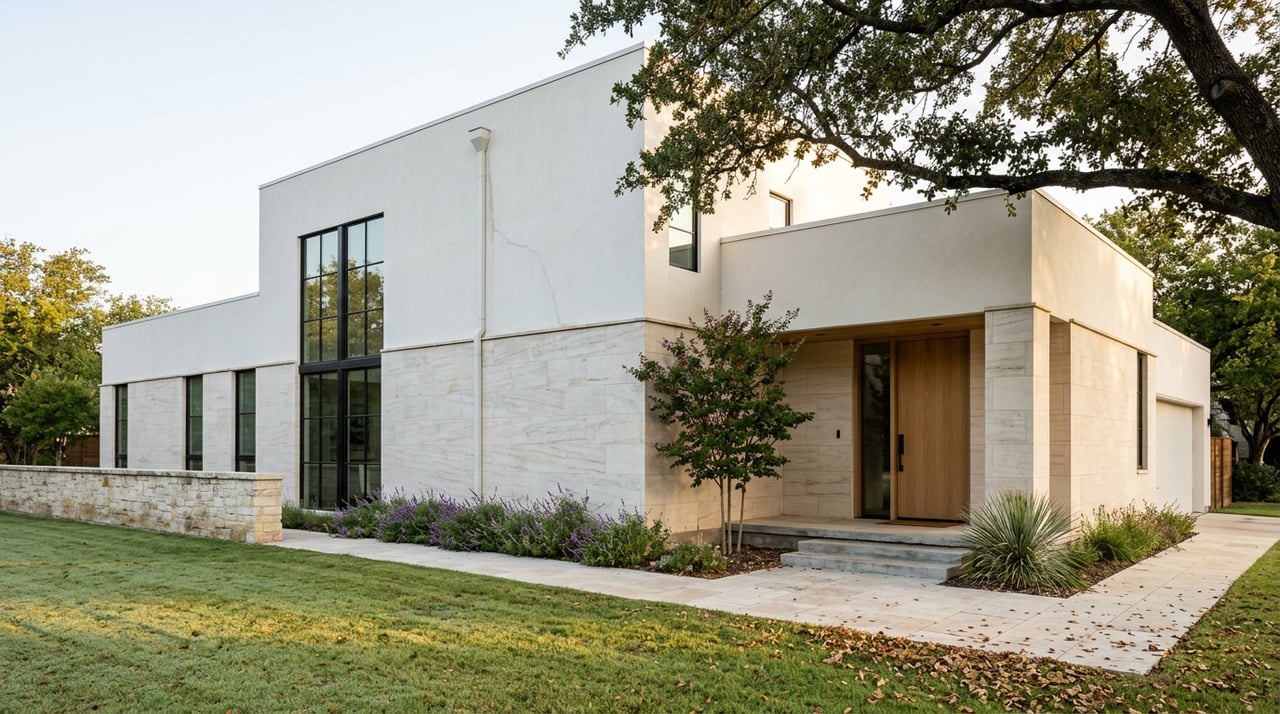
Here's a scenario that plays out often enough in 78731 to matter: a buyer falls for a Highland Park house, assumes the neighborhood feeds Anderson High School the way its Northwest Hills neighbors do, and only runs the exact address through Austin ISD's own school finder once they're already deep into their option period. On plenty of Highland Park streets, that address doesn't feed Anderson at all. It feeds Lamar Middle School and McCallum High School, Austin ISD's fine arts magnet campus. Nobody did anything wrong. The offer just got priced around an assumption that was wrong for that specific block.
That moment is the friction almost nobody talks about when they quote you Highland Park's median list price. The number sounds like it describes one neighborhood. It actually describes at least two, and the split runs through the same zip code without a fence, a sign, or a line on the listing sheet to mark it.
Two Numbers, One Zip Code
In June 2026, MLS-aggregated listing data put Highland Park's median list price at roughly $1.19 to $1.2 million, with average price per square foot in the $560s. By September 2026, zip-code-level data covering all of 78731, Highland Park included alongside Northwest Hills and Cat Mountain, showed a median list price closer to $1.05 million, with homes spending a median of 64 days on market, down 12 percent from a year earlier. Neither number is wrong. They're measuring different baskets of houses, and that's exactly the problem with quoting either one as if it describes a single, stable market.
Here's why the basket keeps changing shape. Highland Park itself keeps lots tight, a fifth to a quarter acre, on streets like Highland Terrace and Perry Lane where 1950s single-story ranches sit next to homes that have been fully rebuilt. One street over, Highland Park West spreads homes from 853 square feet up to 6,586, with a median lot size around 0.363 acres. In neighboring Highland Park West Balcones, the typical home lands closer to 2,800 square feet, but the range runs from original cottages under 1,000 square feet up to custom builds north of 7,000, meaning two houses on the same block can be 40 years apart in vintage and roughly a million dollars apart in price. A median calculated across any of these pockets is averaging through that gap, not describing it.
That volatility shows up in the sales data too. Trailing 12-month figures for Highland Park West have shown median sale prices jump more than 60 percent year over year, not because values suddenly leapt, but because a tightly held, low-volume neighborhood only needs a handful of large or small sales to swing its median hard in either direction. If you're reading a headline stat off a portal and treating it as a stable baseline, you're reading noise generated by which handful of houses happened to close that period.
The Boundary Nobody Draws for You
The housing stock variance is the visible half of the problem. The other half sits underground, in Austin ISD's attendance boundaries, and it's the part that actually catches buyers off guard mid-transaction.
Highland Park, Highland Park West, and Highland Park West Balcones share a core pathway: Highland Park Elementary feeds Lamar Middle School, a Fine Arts Academy, which feeds McCallum High School, Austin ISD's fine arts magnet campus. Meanwhile, the neighboring, similarly priced areas of Northwest Hills and Cat Mountain feed a different pathway entirely: Doss Elementary to Murchison Middle to Anderson High School. Some addresses at the edges of the broader Highland Park West footprint do fall into the Anderson zone. Most of the core Highland Park Elementary pathway does not.
Neither pathway is objectively better than the other. They're built around different things: Lamar and McCallum emphasize a fine arts curriculum track, while Anderson runs the more traditional comprehensive high school model that Northwest Hills and Cat Mountain families are zoned into. A family with a kid oriented toward music, theater, or visual art may find the McCallum pathway the stronger fit outright. A family assuming they're buying into the Anderson zone because a neighboring street is, and building their offer price around that assumption, is the transaction risk that actually matters here. It's an address-by-address question, not a neighborhood-wide one, and the only way to answer it before you write an offer is to run the exact address through Austin ISD's own attendance area boundaries rather than trusting a listing description or a nearby comp.
What a Block Actually Tells You
Put the two mechanisms side by side and the median price starts to make sense as an average of genuinely different products.
| What you're comparing | Highland Park / Highland Park West / West Balcones | Northwest Hills / Cat Mountain |
|---|---|---|
| Typical lot size | 1/5 acre up to 3/4 acre depending on pocket, median ~0.36 acre in Highland Park West | Larger, often quarter-acre-plus |
| Housing vintage | 1950s-60s originals through full modern rebuilds, same block | Mostly 1960s-1980s builds, many renovated |
| School pathway | Highland Park Elementary to Lamar Middle (Fine Arts Academy) to McCallum High | Doss Elementary to Murchison Middle to Anderson High |
| Terrain | Hilly, wooded, West Balcones backs to Bright Leaf Nature Preserve | Similar hill terrain, heavy tree canopy |
The terrain line matters more than it looks. Highland Park West Balcones backs up against Bright Leaf Nature Preserve on its western edge, and that's part of why the tree canopy there is so dense and why so many of those lots have real grade to them rather than the flat pad you'd get in a newer subdivision further north. That's worth factoring into your inspection budget, not just your aesthetic preference. A hillside lot with mature oaks photographs beautifully. It also means foundation and drainage questions deserve more attention than they would on a flat quarter-acre in a 1990s development.
Reading the Median Correctly
None of this means Highland Park's median price is meaningless. It means the median is an average of two different bets, and you need to know which one you're placing before you write an offer.
If your priority is a fine arts curriculum track and you want mature trees, hillside lots, and a ten-minute run to downtown or UT, the Highland Park Elementary pathway through Lamar and McCallum is a real answer, not a fallback. If you specifically want the Doss-Murchison-Anderson pathway, don't assume proximity gets you there. Confirm the exact address, because the boundary line sits closer to some Highland Park streets than most buyers expect.
And when you're comparing two listings at similar price points, ask what's actually driving that number. A 900-square-foot original cottage on a flat lot and a 4,000-square-foot rebuild three doors down can carry wildly different price tags while both technically sitting inside "Highland Park." The median splits the difference. Your offer shouldn't.
A Few Questions Worth Answering Directly
How do I check which school my specific Highland Park address feeds? Use Austin ISD's official attendance boundary tool and enter the exact address, not the neighborhood name. Boundaries are drawn street by street, and a listing description that says "Highland Park" doesn't tell you which pathway you're on.
Why did the median price for part of Highland Park jump so sharply in one year? Small, tightly held neighborhoods produce volatile medians because a handful of unusually large or unusually modest sales can swing the number substantially. A big year-over-year jump in a low-volume area often says more about which homes happened to sell than about a shift in underlying value.
Is a home on the McCallum pathway worth less than one zoned to Anderson? Not inherently. The two pathways represent different curriculum emphases rather than a hierarchy, and price differences in Highland Park trace more directly to lot size, home vintage, and specific address than to school assignment on its own.
Where This Leaves You
Highland Park still holds onto the things that make it worth the search: mature oak canopy, a genuinely walkable stretch near Highland Park Elementary and neighborhood staples like Russell's Bakery and Chez Zee, and an active Highland Neighborhood Association that still runs a movie night at Perry Park and a Fourth of July parade every year. What it doesn't hold is a single, uniform price story. Buying here well means treating the median as a starting question, not an answer, and confirming the two things a listing sheet won't tell you on its own: which era of house you're actually looking at, and which school pathway comes with that exact address.
If you're weighing a specific Highland Park street against a comparable one in Northwest Hills or Cat Mountain, that's the kind of address-level read worth getting before you write an offer, not after. Olivia Osborne has spent years tracking these blocks house by house and can walk you through what a given address actually gets you, school pathway, lot condition, and price history included. Reach out, or start with an instant home valuation to see where your target street actually lands.